
The inner clock – How the biorhythm regulates energy, sleep, and health
Energy in the morning, performance during the day, and recovery at night follow an internal schedule. The biorhythm determines how well our body functions.
Why so many people fall “out of sync”
Many people are familiar with the feeling: you seem to get enough sleep, yet still feel tired in the morning. In the afternoon, concentration declines; in the evening, you suddenly feel wide awake – often accompanied by cravings or inner restlessness. Falling asleep is difficult, and staying asleep even more so.
Such complaints are often dismissed as a normal part of a stressful daily life. In reality, however, they frequently indicate a disrupted biorhythm. The body does not function randomly but follows an internal schedule. When this schedule becomes unbalanced, numerous biological processes are thrown off – with noticeable consequences for energy, sleep, and health.
But what exactly controls this internal rhythm? And why is it no longer functioning reliably for so many people?
What is the biorhythm?
The biorhythm describes the temporal organization of biological processes in the body. Nearly all functions – from hormone release and digestion to cellular regeneration and immune activity – follow recurring patterns. These rhythms ensure that specific processes occur at the times when they are most beneficial for the organism.
The most well-known of these rhythms is the circadian rhythm, an approximately 24-hour cycle aligned with the alternation of day and night. In addition, other biological rhythms exist: ultradian rhythms that repeat several times within a day (such as sleep phases or hormone secretion), infradian rhythms such as the menstrual cycle, as well as seasonal and annual rhythms, for example in immune activity or energy requirements. Together, these rhythms form the temporal framework of our organism.
Why the body works in rhythms
Rhythmic processes are energetically efficient and evolutionarily advantageous. They allow the body to use resources in a targeted manner, bundle repair and regeneration processes, and optimally adapt to recurring environmental conditions. When this temporal order is disrupted, processes occur at the wrong time or with reduced efficiency – the body works against its own rhythm.
The inner clock: How the body measures time
The regulation of the biorhythm is controlled by so-called biological clocks. The suprachiasmatic nucleus in the hypothalamus acts as the central pacemaker of the circadian rhythm. It synchronizes numerous subordinate, so-called peripheral clocks located in almost all organs and cells.
These peripheral clocks also respond to time cues, such as food intake or physical activity, but they are primarily coordinated by the central clock. In this way, the organism remains temporally synchronized.
The circadian rhythm is genetically anchored but remains adaptable to environmental influences. People differ in their so-called chronotypes – that is, whether they are more productive early or late in the day. From an evolutionary perspective, this diversity makes sense: staggered sleep–wake times within a group increased safety, as some group members were always awake. Only rigid social time structures have turned this natural diversity into a problem in modern life.
Natural daily rhythm of key hormones
Hormones are central messengers of the biorhythm. Their secretion follows a clear daily pattern that regulates activity, regeneration, and the body’s ability to adapt. The most well-known are melatonin and cortisol, but insulin, growth hormone, and many other signaling molecules also show pronounced daily fluctuations.
Cortisol reaches its highest levels in the early morning hours. It supports waking, promotes alertness, and provides energy. Over the course of the day, cortisol levels gradually decline. Melatonin, in contrast, is secreted mainly in the evening and at night and signals the body to transition into rest and regeneration mode.
This finely tuned interaction ensures that we are productive in the morning and able to wind down in the evening. However, various aspects of modern lifestyles can weaken or shift these natural secretion patterns. Cortisol remains elevated for longer, while the rise in melatonin is delayed or reduced – with far-reaching consequences for sleep quality, regeneration, and long-term health.
Which factors influence the biorhythm?
Our biological system is designed to respond to regular, natural time cues. Many aspects of modern life, however, consistently act against this internal order and disrupt the temporal coordination of biological processes.
Light – The strongest time cue
Light is the most important external signal for the internal clock. Artificial light that does not follow the natural course of daylight can significantly disrupt the biorhythm. Particularly problematic is intense blue-rich light in the evening, as it signals “daytime” to the body and delays the transition into nighttime rest. Blue light inhibits the production of melatonin, which is required to initiate key regeneration and repair processes during the night.
At the same time, many people lack sufficient natural daylight exposure in the morning. This light deficiency makes it harder for the internal clock to properly adjust to the new day – with consequences for alertness, energy, and concentration.
Tip: A key measure to support the biorhythm is conscious light management. Ideally, this includes a short walk outdoors in the morning, even on cloudy days. In the evening, light sources should be warm and dimmed (approximately 1,800–2,700 Kelvin, preferably below 50 lux). In addition, blue-light-filter glasses can be useful if screens are still used in the evening. Adjusting the brightness and color settings of smartphones, tablets, and computer screens is also helpful to reduce blue light exposure in the evening.
Nutrition and meal timing
Not only what we eat, but also when we eat influences the biorhythm. Irregular meals or eating late in the evening keep the metabolism active well into the night. Regeneration processes are delayed, and blood sugar fluctuations may be promoted.
Tip: Keeping meal times as regular as possible helps stabilize metabolism. Ideally, the last larger meal should be planned about three hours before going to bed. Small amounts of complex carbohydrates in the evening can be beneficial, as they support serotonin and melatonin synthesis and may help dampen nighttime cortisol levels.
Sleep habits and social time cues
Shift work, frequent time zone changes, or highly irregular bedtimes can throw the internal clock out of sync. So-called “social jet lag” – going to bed late on weekends and getting up early during the week – also acts like a regularly recurring mini jet lag.
Tip: A consistent evening routine and keeping sleep and wake times as similar as possible – even on weekends – help the internal clock remain stable.
Stress and the nervous system
Chronic stress is a major disrupting factor for the biorhythm. A persistently activated stress response alters cortisol secretion and makes the physiological transition into nighttime regeneration more difficult.
Tip: Regular relaxation routines, physical activity during the day, breathing exercises, or calm evening rituals support the nervous system in shifting from activity mode into rest mode.
What happens when the biorhythm is disrupted?
A disrupted biorhythm rarely becomes noticeable in a dramatic way right away. Instead, it often develops gradually, with subtle changes that are easily overlooked or attributed to other causes. For this reason, the underlying rhythm disturbance frequently goes unrecognized for a long time.
Typical early signs
Early signals include persistent fatigue despite sufficient sleep duration, concentration difficulties during the day, or a pronounced performance slump in the afternoon. Difficulty falling asleep, nighttime awakenings, or increased appetite in the evening can also be indicators. Many affected individuals additionally report inner restlessness, irritability, or the feeling of “never truly being rested.”
Long-term consequences of chronic dysregulation
If the biorhythm remains disrupted over a prolonged period, more profound changes may develop. Metabolic flexibility decreases, blood sugar regulation becomes unstable, and regeneration processes become less efficient. The immune system and hormonal balance may also be impaired. This can contribute to the development of a wide range of chronic health problems.
Allvital products to support the biorhythm
In addition to light exposure, regularity, and stress management, targeted supplementation with selected micronutrients can help gently support the biorhythm:
- Magnesium Plus: Magnesium contributes to normal nervous system function and normal muscle function. Adequate intake can be particularly helpful during periods of increased stress, supporting evening relaxation and promoting physical regeneration.
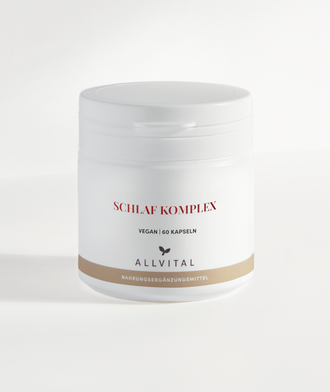
- Sleep Complex: The Sleep Complex combines selected micronutrients and plant extracts specifically designed to support nighttime regeneration and restful sleep. It is a unique, optimally balanced 10-component formula available exclusively from Allvital. Detailed information can be found in our Sleep Complex blog article.
- 5-HTP: 5-HTP is a precursor of serotonin and melatonin and can support the body’s own production of these two neurotransmitters.
- Vitamin B Complex: B vitamins contribute to normal energy metabolism and normal nervous system function. They play a central role in stress regulation and many other physiological processes. Our Vitamin B Complex contains all eight essential B vitamins in high doses.
- Phyto Relax: Phyto Relax contains selected plant compounds traditionally used to support relaxation and inner balance. This product is particularly suitable as an evening supplement or during phases of increased nervous tension.