
High blood pressure: Causes and holistic therapy
High blood pressure can have serious health consequences and often goes unnoticed for a long time. Here you will find the key information on causes and holistic treatment approaches.
What is high blood pressure?
With every heartbeat, the heart pumps blood into the arteries, creating pressure on the vessel walls. If this pressure remains permanently above the recommended thresholds, it is called high blood pressure or arterial hypertension.
High blood pressure is the most important risk factor for cardiovascular diseases – which are the leading cause of death in Germany and worldwide. In Germany, an estimated 20 to 30 million people live with high blood pressure, often without noticing it at first (1).
When is blood pressure considered high?
Two values are distinguished when measuring blood pressure:
- Systolic value: measured when the heart contracts and pushes blood into the aorta.
- Diastolic value: measured when the heart muscle relaxes and the chambers fill with blood.
Values are given in mmHg (millimetres of mercury). Optimal values are below 120 mmHg systolic and 70 mmHg diastolic – short: 120/70.
According to current recommendations from the European Society of Cardiology (ESC), the following classification applies (2):
- Normal blood pressure: below 120/70 mmHg
- Elevated blood pressure: 120–139 mmHg systolic and 70–89 mmHg diastolic (borderline range with already increased cardiovascular risk)
- Hypertension (high blood pressure): ≥ 140/90 mmHg – treatment is indicated in this range.
Why is high blood pressure dangerous?
Persistently elevated values damage vessels and organs such as the heart, brain, kidneys and eyes. If left untreated, serious and sometimes life-threatening complications can occur:
- Heart: heart failure, heart attack
- Brain: stroke, dementia
- Kidneys: renal insufficiency up to kidney failure
- Eyes: damage to the retina
Causes of high blood pressure
Experts distinguish two forms of the condition: primary (essential) hypertension and secondary hypertension.
Primary hypertension affects about 90 % of patients. In these individuals, no single underlying disease causing the rise in blood pressure can be identified. Instead, various contributing factors – such as diet, activity level, micronutrient status and genetics – are involved.
Secondary hypertension is present when an identifiable underlying disease is responsible for the elevated values. The most common causes are chronic kidney diseases, which directly disturb blood pressure regulation. Hormonal disorders such as adrenal tumours (e.g., phaeochromocytoma) and sleep apnoea syndrome are also relevant. In these cases, treating the underlying condition is the priority.
In the following sections, we focus on primary hypertension, as it affects most patients.
How does primary hypertension develop?
Below, we outline key connections in the development of high blood pressure from a functional medicine perspective.
1) Unhealthy diet and overweight
Those who consistently consume more calories than they expend, frequently eat sugar and rapidly digestible carbohydrates (e.g., refined-flour products), consume many processed foods with additives and unfavourable fats, and use a lot of salt increase their risk for the development of high blood pressure. This dietary pattern harms the body on several levels and promotes processes that raise blood pressure:
- Chronic inflammation: The described diet fosters chronic, low-grade inflammation (“silent inflammation”). This damages the blood vessel walls, favours atherosclerotic changes and reduces arterial elasticity. As a result, pressure fluctuations are buffered less effectively; during physical exertion, values often rise markedly.
- Increased blood viscosity: Unfavourable blood lipids and insufficient water intake increase the thickness of the blood. The heart then has to work against higher flow resistance, and blood pressure rises. Unfavourable lipid profiles typically result from calorie-excess, sugar- and fat-rich diets, physical inactivity and alcohol.
- High salt intake: Salt retains water within the vascular system and thus increases blood volume. Pressure in the vessels rises. For people with hypertension, a daily salt intake below 5 g is recommended.
In addition, this dietary pattern is often accompanied by overweight, insulin resistance, type 2 diabetes and non-alcoholic fatty liver disease. These conditions frequently co-exist with high blood pressure. The diet also damages the gut and is low in micronutrients – more on this in the next sections.
2) Micronutrient deficiency
Micronutrients are essential for virtually all bodily functions. They support blood pressure regulation, vascular health and the body’s own detoxification processes. When they are lacking, inflammatory processes, vascular reactivity and regulatory systems more easily fall out of balance.
3) Gut health
A disrupted gut microbiota can contribute to the development of high blood pressure. An overgrowth of putrefactive bacteria produces so-called biogenic amines, which can be absorbed and promote constriction of blood vessels.
4) Physical inactivity
Regular physical activity strengthens the cardiovascular system and counters several risk factors. Endurance training dilates blood vessels and improves their elasticity. Exercise has anti-inflammatory effects by stimulating the release of myokines from muscle, improves insulin sensitivity and thus helps prevent the development of type 2 diabetes. It also expends excess calories, supports lymphatic flow (and thereby detoxification), and reduces stress.
5) Chronic stress
Both emotional stress in family and work life and physical stress from very intensive training can raise blood pressure. Stress activates the sympathetic nervous system; as a result, the adrenal glands release cortisol and aldosterone. This promotes vasoconstriction as well as sodium and water retention and pushes blood pressure upwards.
6) Additional factors
The following influences can also adversely affect blood pressure:
- lack of sleep
- alcohol and smoking
- environmental and dietary toxins
- genetic predisposition
- older age
Symptoms of high blood pressure
High blood pressure is considered a “silent killer” because it often causes no clear symptoms for a long time and therefore frequently goes undetected. Possible, non-specific signs include headaches, dizziness, nausea, nosebleeds, tiredness or easy fatigability, sleep disturbances and a flushed face. With markedly elevated values, additional symptoms may occur, such as shortness of breath on exertion, visual disturbances, increased thirst and urination, heavy sweating, fluid retention (oedema), reduced exercise capacity and exertional chest pain.
How is high blood pressure treated?
The foundation of primary hypertension management is lifestyle and dietary modification. Key elements include an anti-inflammatory, healthy diet, weight reduction, more physical activity and effective stress reduction. In functional medicine, a needs-based supply of micronutrients is also considered.
Values in the hypertensive range (≥ 140/90 mmHg) should, due to possible complications, also be treated with medication (e.g., ACE inhibitors, beta-blockers, diuretics) in addition to lifestyle measures. Even with elevated but not yet hypertensive readings, close monitoring is advisable. If values improve under a holistic approach, medication dosage may be adjusted; any reduction or discontinuation is carried out exclusively under medical supervision.
Vital nutrients for high blood pressure
The following micronutrients are frequently used in holistic practice:
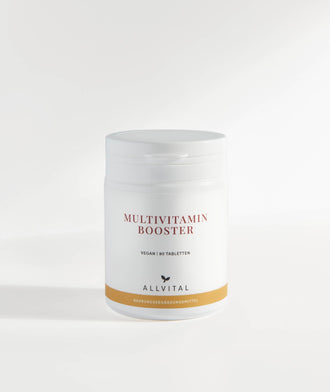
- Potassium: Potassium is involved in regulating blood pressure. It helps the kidneys excrete sodium when too much sodium (high salt intake) is present in the blood. You can find potassium, for example, in our Multivitamin Booster. Each capsule contains 3 mg of potassium and only 1 mg of sodium. Multivitamin Booster provides a solid foundation for the supply of vitamins and minerals and also contains many valuable phytonutrients, as found in an anti-inflammatory diet.
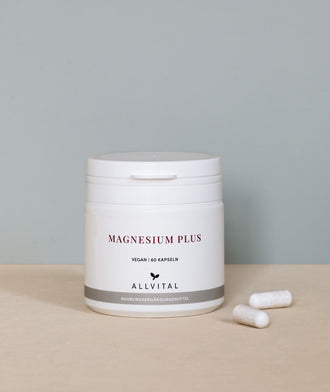
- Magnesium: Magnesium participates in over 300 metabolic reactions and is important for nervous system function and, by extension, heart function. It is also important for maintaining electrolyte balance in the blood. Our Magnesium Plus provides 100 mg of magnesium per serving. Here, the mineral is combined with vitamin B6 to support bioavailability.
- Nattokinase: Nattokinase is an enzyme derived from fermented soybeans and is used to support vascular health. In Nattokinase Complex, nattokinase is combined with an antioxidant-rich vegetable powder blend, valuable amino acids, vitamin C and coenzyme Q10.
- Vitamin C: Vitamin C is important for the formation of collagen, a key structural component of the blood-vessel wall. It also has antioxidant properties. You will find vitamin C in a high dose and combined with other antioxidants in Vitamin C Complex.
- Arginine: The amino acid arginine is the precursor of the signalling molecule nitric oxide (NO). Nitric oxide dilates blood vessels, thereby lowering blood pressure. The formation of arginine requires various cofactors such as B vitamins and magnesium, as well as certain amino acids. All eight essential B vitamins are provided in Vitamin B Complex. For magnesium intake, we recommend Magnesium Plus. A protein-rich diet is also important. Arginine is found particularly in meat, fish, seafood, nuts and seeds.
- Omega-3 fatty acids: Omega-3s are important building blocks of cell membranes and are a fundamental component of an anti-inflammatory diet. Our DHA plus EPA is rich in the essential fatty acids DHA and EPA.
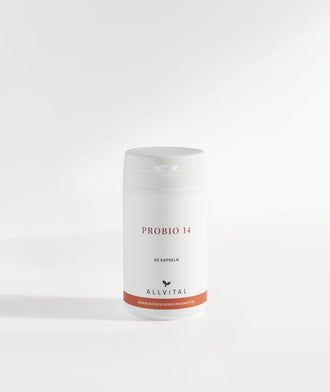
- For the gut: To improve gut health, we recommend Gut-Brain Complex (nutrients for the intestinal mucosa), Enzyme Complex (digestive support) and ProBio 14 (to help build a healthy microbiome).
Please note that taking food supplements should be discussed with a healthcare professional to determine the combination and dosage of products that best suit individual needs.
Sources
- Bluthochdruck in Zahlen. Hochdruckliga [Internet]. [aufgerufen am: 08.10.2025].
- Pocket-Leitlinie: Erhöhter Blutdruck und Hypertonie (Version 2024). DGK [Internet]. [aufgerufen am: 08.10.2025].